Taxable Income
Taxable income is the amount to which tax rates are applied after the required income-calculation steps are completed.
Definition
Taxable income is the amount of income that remains after the relevant deductions and adjustments have been applied and on which tax rates are calculated.
Why It Matters
Taxable income is the figure that connects your return to the tax brackets. If you want to understand why someone moves into a higher bracket or why a deduction matters, taxable income is usually the key number to watch.
Tax Calculation Ladder
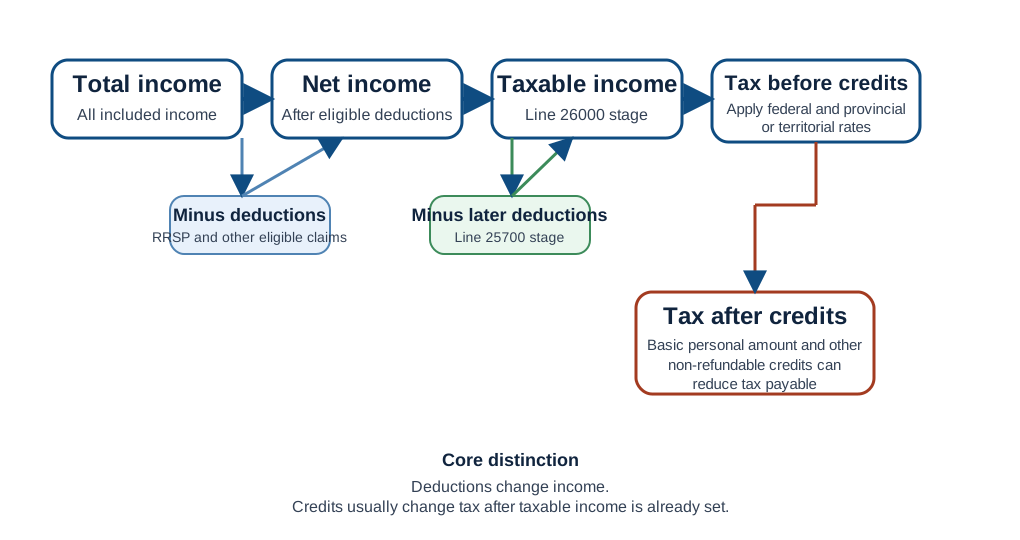
The key idea is that taxable income is a later-stage return figure. It comes after income has been gathered and certain deductions have already reduced it, but before non-refundable credits reduce tax payable.
How It Works in Canada
A Canadian return typically moves from total income to net income and then to taxable income. CRA guidance for line 26000 states that taxable income is generally the amount from line 23600 minus the deductions claimed at line 25700.
$$ \text{Taxable income} = \text{Net income (line 23600)} - \text{further deductions (line 25700)} $$
Once taxable income is determined, federal and provincial or territorial tax rates can be applied. After that, non-refundable tax credits can reduce the tax payable.
This is why deductions and credits do different jobs:
- deductions can lower the income that gets taxed
- credits usually lower the tax calculated after that income has already been measured
| Step | What happens | Why it matters |
|---|---|---|
| Total income | Included income sources are added together | This is the broad starting point of the return |
| Net income | Eligible deductions reduce total income | This figure often affects benefits and income-tested amounts |
| Taxable income | Additional deductions reduce net income further | This is the amount that tax brackets apply to |
| Tax after credits | Non-refundable credits reduce calculated tax | This changes tax payable without changing taxable income |
Practical Example
If a taxpayer reports employment and investment income, claims an RRSP deduction, and then arrives at a lower taxable income amount, that lower figure is what the tax brackets apply to. The basic personal amount and other non-refundable credits usually affect tax payable afterward.
Common Misunderstandings
Taxable income is not the same as total income.
Taxable income is also not the same as tax payable. It is the amount used to calculate tax before credits and withholding are fully reconciled.
It is also not just another label for net income. Net income often feeds into benefit calculations, while taxable income is the figure used for the basic tax-bracket calculation.
Related Terms
- Total Income
- Net Income
- RRSP Deduction
- Child Care Expenses
- Marginal Tax Rate
- Effective Tax Rate
- Basic Personal Amount
- Non-Refundable Tax Credit
Knowledge Check
Do tax brackets apply to total income or taxable income? Answer: They apply to taxable income. Total income is an earlier step in the return.
Does a non-refundable tax credit normally change taxable income directly? Answer: No. It usually reduces tax payable after taxable income has already been calculated.
Caveat
Loss carryforwards, special deductions, Quebec filing differences, and multi-jurisdiction business-income rules can affect the path from net income to taxable income, so complex returns should be checked against the current CRA and provincial guidance.