Capital Gain
A capital gain arises when capital property is disposed of for more than its adjusted cost base and selling costs.
Definition
A capital gain is generally the profit realized when capital property is disposed of for more than its adjusted cost base and related selling costs.
Why It Matters
Capital gains matter because selling investments or other capital property can create tax consequences even when the asset was held for years and even when no tax slip like a T4 is involved.
Calculation Diagram
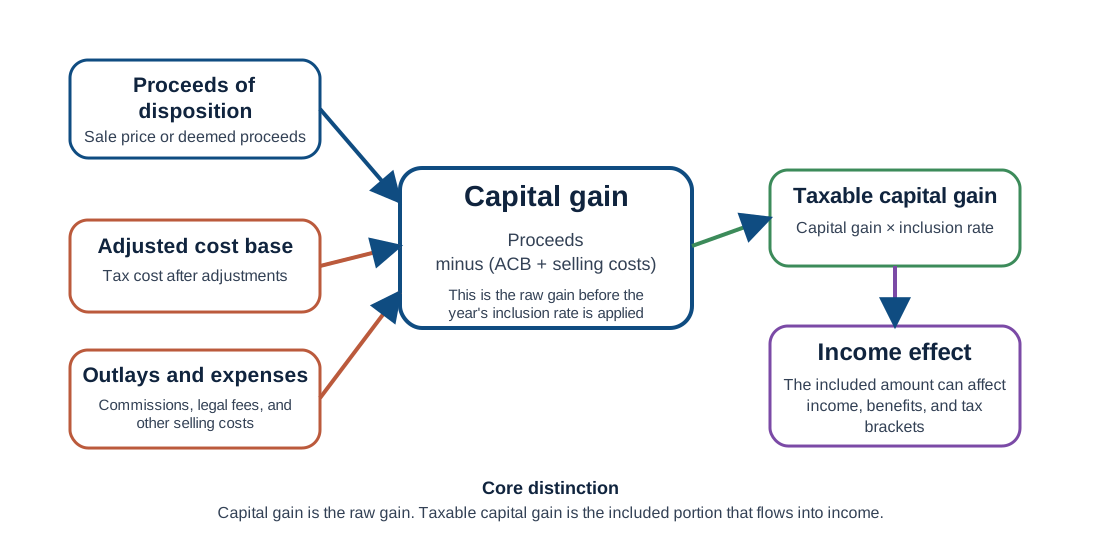
The visual distinction matters because the raw gain is not always the same as the amount that ultimately enters income for the year.
How It Works in Canada
In Canadian tax language, the full gain is not usually the same thing as the amount included in income. The capital gain is the profit amount itself. The taxable capital gain is the portion that the rules require to be included in income for the relevant year.
CRA guidance describes the gain calculation by subtracting the total of the property’s adjusted cost base and the outlays and expenses of disposition from the proceeds of disposition.
$$ \text{Capital gain} = \text{Proceeds of disposition} - (\text{Adjusted cost base} + \text{Outlays and expenses}) $$
That is why capital-gain reporting depends heavily on records:
- what the property cost
- what adjustments changed that cost base
- what the disposition proceeds were
| Input | What it usually means | Why records matter |
|---|---|---|
| Proceeds of disposition | What you received or are deemed to have received on sale or disposition | Sale documents and slips support the reported amount |
| Adjusted cost base | Your tax cost after required adjustments | A wrong ACB can overstate or understate the gain |
| Outlays and expenses | Selling costs such as commissions or legal fees where applicable | These can reduce the gain if they are properly documented |
Practical Example
A taxpayer sells non-registered investments for more than the adjusted cost base of those holdings. The difference, after the required adjustments, can create a capital gain. Only the taxable portion is then included in income under the current rules.
Common Misunderstandings
A capital gain is not the same as dividend or interest income.
It is also not automatically the same as the amount added to taxable income, because only the taxable capital-gain portion is included.
It does not depend only on the sale price. ACB and selling costs are part of the calculation too.
Related Terms
Knowledge Check
Is a capital gain automatically the same as the amount included in income? Answer: No. The taxable capital gain is the included portion under the rules for the year.
Why does adjusted cost base matter to capital-gain reporting? Answer: Because the gain depends on the difference between the proceeds of disposition and the properly adjusted cost base, with relevant expenses taken into account.
Caveat
Disposition rules, special property types, foreign-currency issues, and the inclusion rate can change by tax year and situation, so exact capital-gain treatment should always be checked against the current rules.